Make your home feel bigger without knocking a single wall down
You don’t need a skip outside or a builder’s radio blaring at 7am to make a home feel larger. I’ve lived in places where you could cross the living room in four steps if you were in a rush, and still managed to breathe. Not always calmly, mind you. Space is partly physical and partly psychological, which sounds like something said in a pub after one drink too many, yet it holds up.
What follows isn’t about trickery in a glossy-magazine sense. It’s about small shifts that nudge a room into feeling looser, calmer, slightly less boxed in. Some ideas clash with each other, oddly enough. Others repeat themselves in spirit. That’s fine. Homes aren’t tidy arguments.
Light changes mood faster than furniture ever will
Natural light does something to a room that paint tins can only dream of. I noticed this years ago when I swapped a heavy curtain for a thinner one in a north-facing flat in Leeds. Same room, same battered sofa, and suddenly it felt taller. Not brighter exactly, just less compressed.
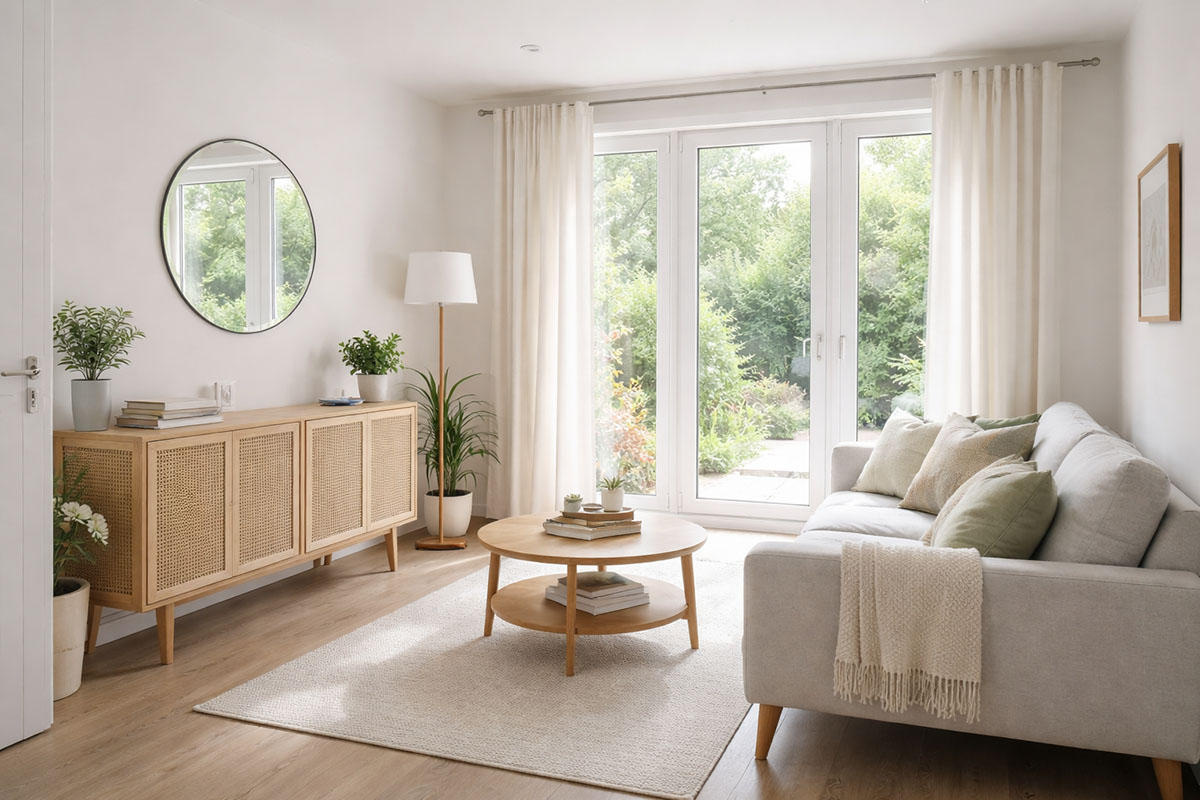
Mirrors help here, not the fussy kind with bevelled edges and drama. Plain mirrors, placed opposite or near windows, scatter daylight around like a mild magic trick. You walk in and think, “This feels easier”. No idea why. It just does.
If windows are small, resist the urge to crowd them with plants, ornaments, bits and pieces you’ll dust once a year. Let the glass breathe. Clear surfaces around openings help light spread without interruption, and the lack of visual clutter does more for openness than most additions ever will. It’s a quiet shift, but one you tend to feel rather than analyse.
Pale colours aren’t boring, they’re forgiving
Light walls get a bad reputation for being safe. Safe is underrated when rooms are tight. Whites, off-whites, chalky greys, soft greens that hint at outdoors without shouting about it, they bounce light around and blur the edges of where walls begin and end.
Dark colours draw lines. Lines define limits. Sometimes that’s cosy, sometimes it’s claustrophobic. I once painted a box room deep blue, convinced it would feel snug. It felt like a cupboard with opinions.
Painting the ceiling close to the wall colour helps as well. A sharp contrast above your head slices the room horizontally, which shortens everything. Soft transitions stretch it upward. You don’t notice it working, which is probably the point.
Furniture should leave space to move and to think
Oversized furniture in a small room feels impressive for about ten minutes. After that it’s an obstacle course. Scale matters more than style here. A slim sofa with legs shows floor beneath, which tricks the eye into reading more space than exists.
Pulling furniture away from walls sounds counterproductive, yet it opens pathways. When everything hugs the perimeter, the middle feels stranded. A chair angled slightly, a sofa floating a few inches forward, suddenly there’s flow. Flow is a vague word, though you sense it when it’s missing.
Low-backed furniture helps sightlines travel further. Your eyes don’t crash into barriers. They wander, which makes the room feel longer. I learned this the hard way after hauling a high-backed armchair up two flights of stairs, only to realise it blocked half the room visually.
One item doing two jobs keeps rooms calmer
Multifunctional furniture isn’t clever, it’s practical. Storage ottomans that swallow clutter. Beds with drawers beneath. Coffee tables that open up and hide mess you don’t want to think about at 9pm.
Clutter shrinks rooms faster than walls. Even neat piles take up mental space. When objects vanish behind closed doors, the room relaxes. You relax. There’s a connection there that decorators talk around without naming.
I’ve got a bench in the hallway that holds shoes, bags, and the occasional parcel I forgot about. It looks innocent. It’s doing heavy lifting.
Vertical space waits patiently to be noticed
Most homes waste height. We focus on floor area since that’s where we walk, sit, trip over things. Walls rise above us quietly, unused. Tall shelving draws the eye upward, which stretches perception. Even narrow ladder shelves tucked into corners create a sense of lift.
Wall-mounted cupboards in kitchens free up floor space and keep walkways open. In living rooms, shelving that climbs close to the ceiling makes walls feel taller. Stop shelves a foot below the ceiling and you cap the room visually. Let them reach higher and everything breathes upward.
Doors count too. Painting them the same colour as walls makes them recede. Contrast shouts. Silence is useful.
Curtains can stretch rooms when hung with intention
Curtains work best when they cheat. Hang the rod near the ceiling, even if the window sits lower. Let fabric fall to the floor. Vertical lines pull the eye upward, like pinstripes on a suit. Short curtains chop the wall in half, which shortens everything.
Sheer fabrics allow light through while softening hard edges. Linen, cotton blends, nothing stiff. Heavy drapes swallow space unless the room already has height to spare. Light curtains move with air, which adds a sense of life. Movement makes rooms feel larger. Strange but true.
Decluttering isn’t a weekend task, it’s ongoing
You can decorate around clutter or you can remove it. Only one option creates space. That doesn’t mean minimal living with nothing on show. It means fewer objects competing for attention.
I try a rough rule: if something hasn’t been used or enjoyed in a year, it’s on borrowed time. This rule breaks occasionally. Sentiment interferes. That’s fine. Homes aren’t showrooms.
Storage that hides everyday mess is your ally. Open shelves invite accumulation. Closed cupboards forgive laziness. Some days laziness wins.
Floors matter more than we admit
Continuous flooring across rooms lengthens sightlines. Too many transitions chop homes into boxes. If changing floors isn’t possible, use rugs carefully. One large rug makes a room feel bigger than several small ones floating about like islands.
Light floors reflect more light. Dark floors ground spaces, which can feel heavy in small rooms. If replacing floors isn’t on the cards, lighter rugs can lift things.
Even the direction floorboards run can affect how a room is read. Boards laid lengthways tend to pull the eye along the room, while boards running across it can make the space feel broader. It’s subtle and depends on the room itself, but once noticed, it’s hard to unsee.
Small changes stack up over time
None of these ideas alone will make a flat feel ten times larger. Taken together, they loosen the edges. Homes aren’t measured only in square footage. They’re measured in how easily you move through them, how your shoulders drop when you sit down, how often you sigh without realising.
Try one change. Live with it. Try another. Rooms respond slowly, like people. When they finally open up, it feels earned.
Frequently asked questions
Q: How can I make a small room look bigger without renovating?
A: Let in more natural light, use light paint colours, and keep walkways open with scaled furniture. Mirrors and floor-to-ceiling curtains also help stretch the space visually.
Q: Do mirrors really make a room look bigger?
A: Yes. A mirror placed near or opposite a window bounces light around the room and adds visual depth, which can make a small room feel more open.
Q: What paint colours make a small room feel bigger?
A: Whites, warm off-whites, pale greys, and soft muted pastels help reflect light and soften edges. Matching the ceiling closely to the wall colour can also make the room feel taller.
Q: How should furniture be placed in a small living room to make it feel bigger?
A: Keep clear routes through the room and avoid blocking sightlines with bulky pieces. Leaving a little space around key items and choosing furniture with visible legs can make the floor area feel larger.
Q: What type of curtains make a room look bigger?
A: Hang the curtain pole close to the ceiling and let curtains drop to the floor to create height. Sheer or light fabrics keep the window bright while still adding a tall, clean line.
Q: How does decluttering make a home feel bigger?
A: Less visual clutter means the eye can travel further, so rooms feel calmer and more spacious. Closed storage, like cabinets and ottomans with lids, helps keep surfaces clear.
Q: What are the best storage ideas for small spaces?
A: Use vertical storage such as tall shelving, wall-mounted cupboards, and over-door organisers. Multifunctional pieces like storage beds and nesting tables help reduce extra furniture.
Q: Does a large rug make a room look bigger?
A: Often, yes. A larger rug anchors the seating area and reduces the chopped-up look that multiple small rugs can create, which can help a small room feel more continuous.